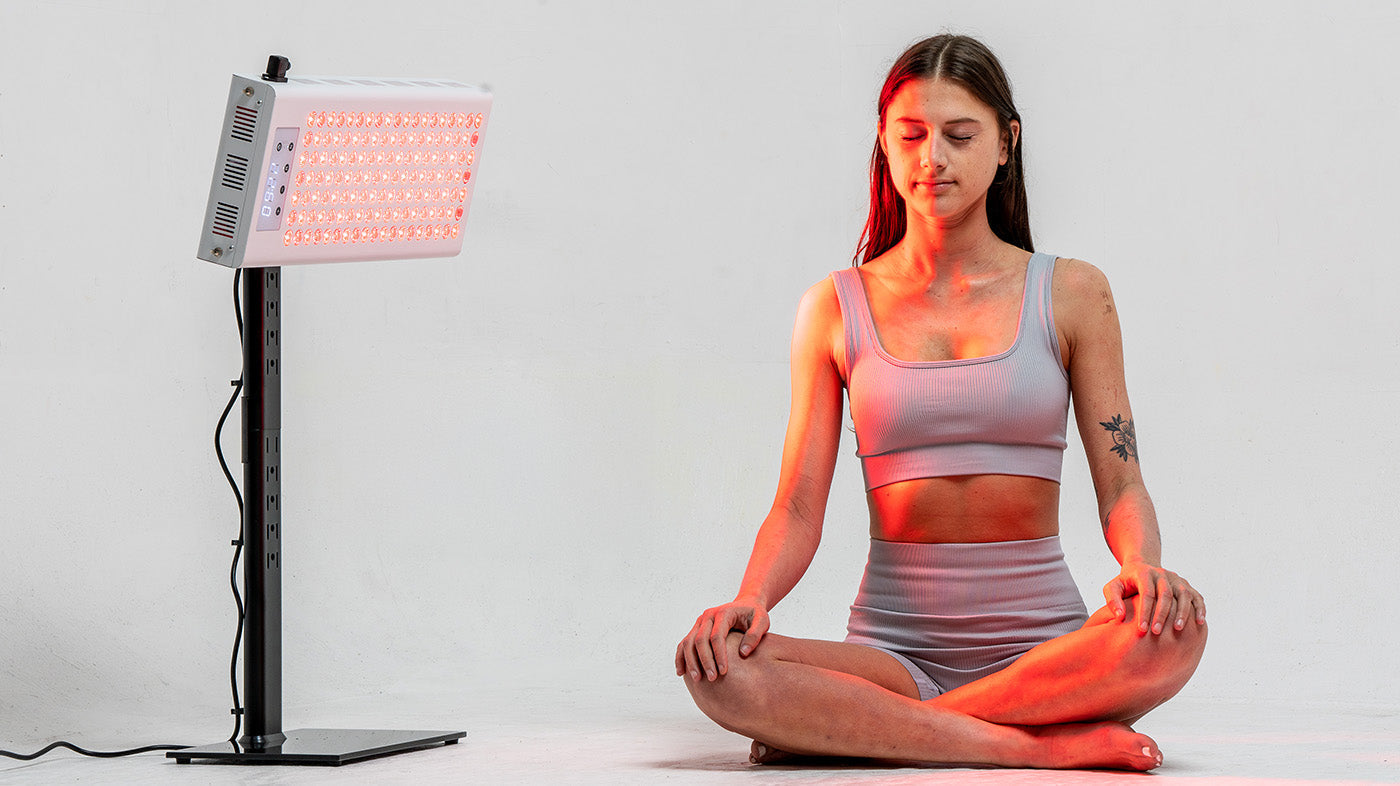
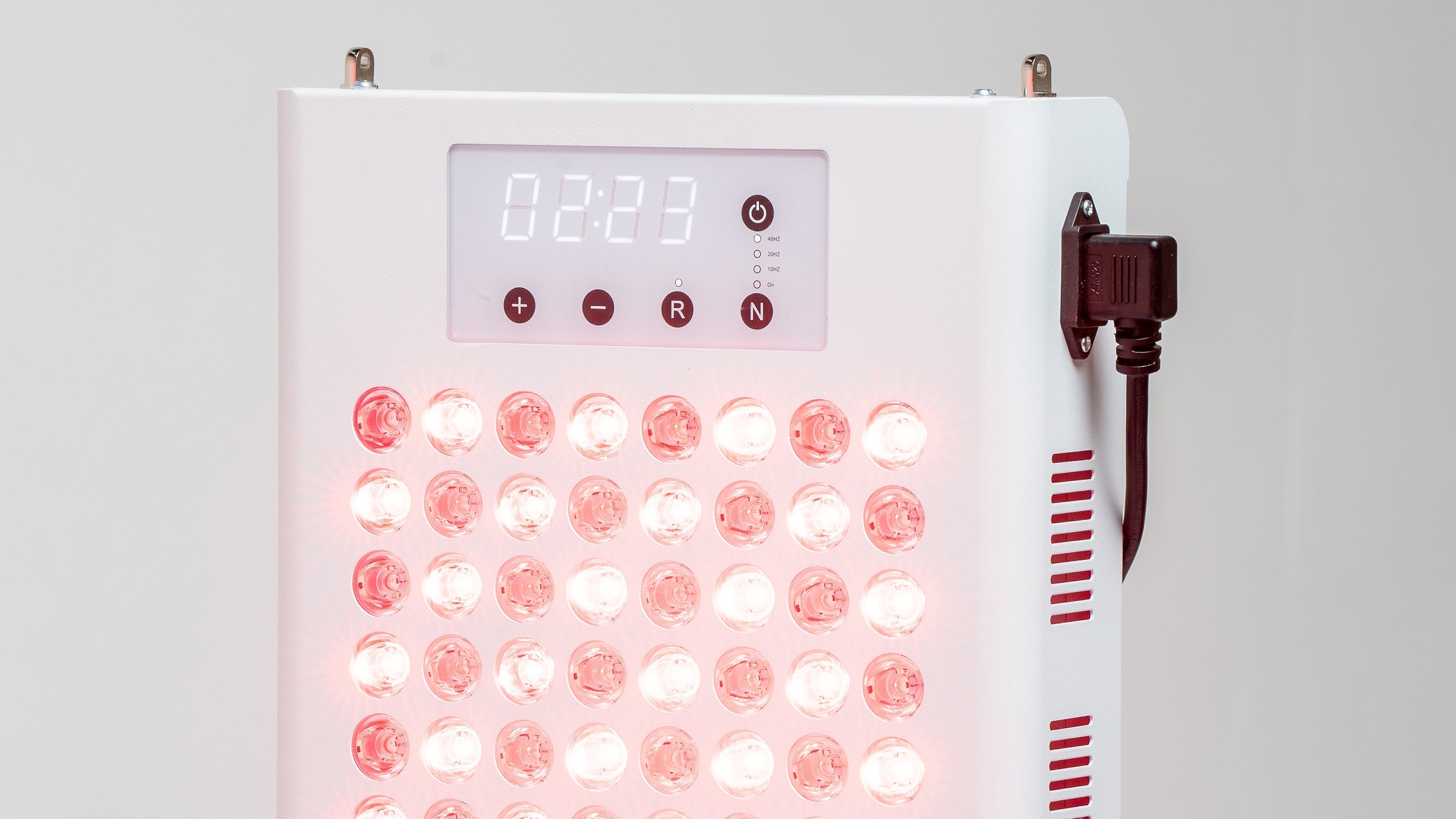
The best red light space is one you will actually use. Where you put your panel affects how consistently you use it, and consistency is what makes a red light routine worth building in the first place. Before you think about distance or session length, start with location.
Choosing a Location
Our RedRush panels work in almost any room with a flat wall or floor space and an outlet nearby. Bedrooms, home gyms, home offices, and living rooms all work well, and each fits a different kind of routine.
- Bedroom: a natural fit for evening sessions, right before winding down for the night.
- Home gym or workout space: pair a session with a fitness routine you've already built into your day.
- Home office: easy to fit in during a break between meetings or at the start or end of the workday.
- Living room or den: a comfortable, shared space that's already part of the household's daily rhythm.
A few things apply no matter which room you pick. Keep the space well-ventilated and make sure the panel and cords are clear of water and away from excessive moisture. Look for a spot with a few feet of clearance in front of the panel, so you have room to step back and adjust your distance. Most importantly, follow the safety instructions in the user manual.

Wall, Stand, or Door: Three Ways to Set Up Your Panel
Our RedRush 400 and RedRush 840 panels ship with two mounting kits in the box: wall hanging hardware and a door hanging kit.
The wall mounting hardware includes wall anchors and screws to mount the panel on the wall. Once it's up, the panel stays mounted and ready, so you can start a session the moment you walk into the room.
The stand, which is sold separately or in a bundle, allows the panel to be easily moved between rooms or repositioned as you change distances mid-session. The stand works especially well in a bedroom that doubles as an office or guest room. Tuck the panel away when you're not using it, then bring it back out for your next session.
The door hanging kit allows the panel to be hung without any permanent modifications to the door. An adjustable pulley clips over the door hook, and you're set up in minutes. It works for either panel, and it's the quickest way to try a session before you commit to a permanent spot.
Understanding Distance
Distance changes how concentrated the light is when it reaches you. Our RedRush manual breaks distance into three practical zones and knowing them makes it easier to plan a session before you start.
Close range, around 6 inches, concentrates the light over a small area. It suits focusing on one spot rather than your whole body, and sessions at this range tend to run shorter, generally around 10 minutes.
A middle distance, around 24 inches, is the starting point for a fuller-body session, though panel size changes how much ground it covers from there. The RedRush 840 Pulse's larger array reaches roughly 90 to 100 percent of your body at 24 inches, while the more compact RedRush 400 Pulse covers closer to half of your body at the same distance.
Farther back, around 36 inches, spreads the same panel's light across your entire body at once for a gentler, lower-intensity session, generally taking a bit longer per side to reach comparable coverage.
Start with whichever distance matches today's goal, then confirm the session time in your panel's manual. The right distance changes depending on what you're doing.
Session Length by Distance
Close-range sessions, around 6 inches, run about 10 minutes on the area you're focusing on. At 24 inches, the RedRush 840 Pulse covers front and back in about 5 minutes each, for a 10-minute total. The RedRush 400 Pulse needs closer to 20 minutes at the same distance, split across four sections, since its panel covers less ground per pass. Back at 36 inches, plan on about 10 minutes per side, front and back, for 20 minutes total.
Cap your total time at 30 minutes a day no matter which setup you use. The manual sets that limit regardless of distance or panel, so treat it as a hard stop rather than something to build toward. If you're new to your panel or sensitive to bright light, start at a 1/4 of these times and adjust once you know how your body responds.
A Few Setup Mistakes to Avoid
- Skipping a distance marker and eyeballing it each time, which makes sessions hard to keep consistent.
- Mounting the panel where a reflective glare may make it uncomfortable for your eyes.
- Choosing a spot without enough clearance to step back to your full working distance.
- Ignoring ventilation in small, enclosed rooms during longer sessions.
RedRush panels are general wellness devices and aren't intended to diagnose, treat, cure, or prevent any disease. Talk to your physician before starting a red light routine, especially if you're pregnant or nursing, have a medical condition, take medications that increase light sensitivity, or aren't sure whether light exposure is right for you. This post is for general information and isn't a substitute for individual medical advice.